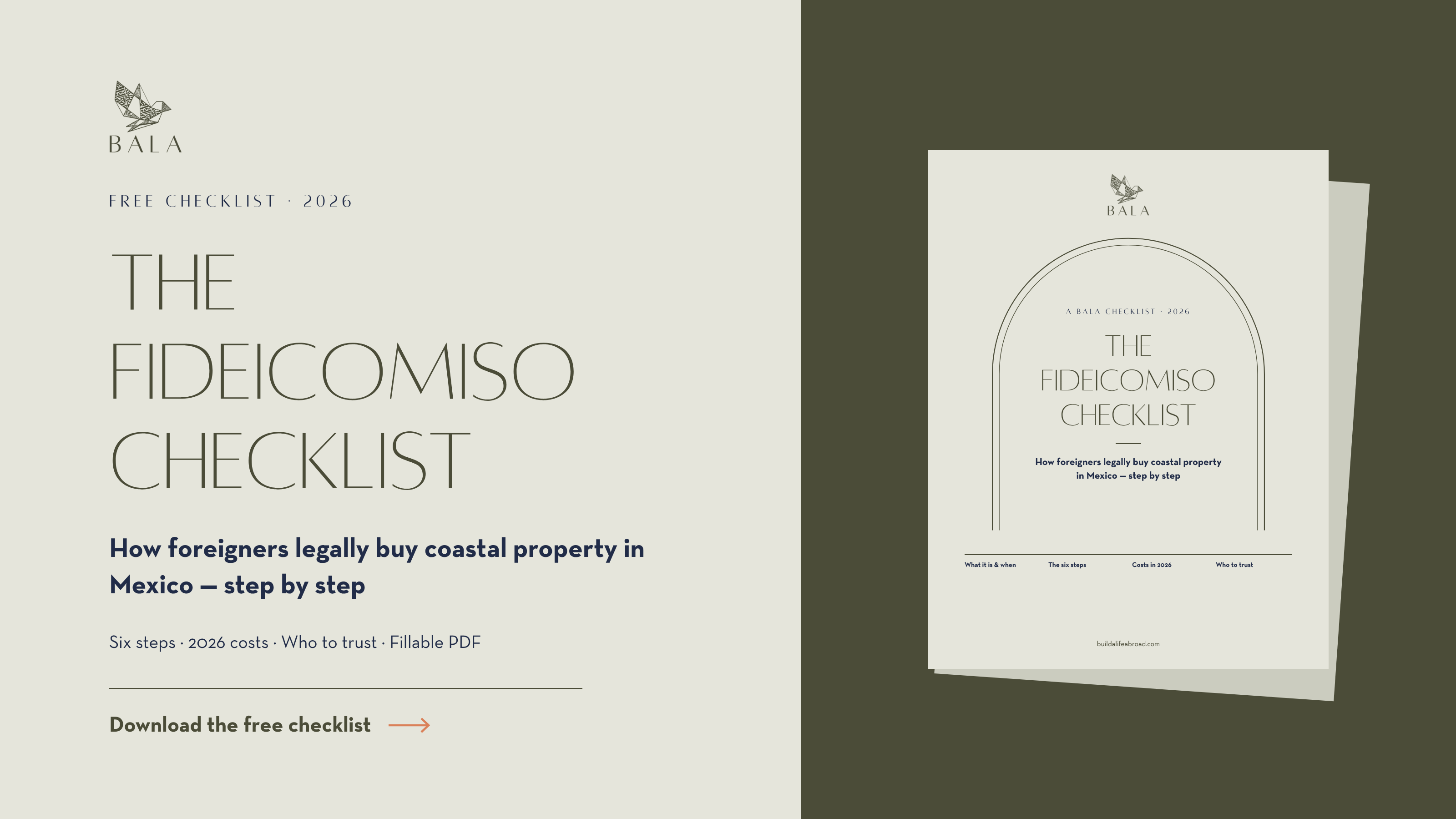

If you’ve searched “fideicomiso Mexico” or “can Americans or Canadians own property in Mexico?” you’ve probably seen confusing answers about restricted zones, 50-year terms, and bank trusts. The truth is this: Americans can legally own property in Mexico — even beachfront real estate — but only if the purchase is structured correctly.
A fideicomiso isn’t a loophole or a lease. It’s a legal bank trust designed specifically to protect foreign buyers. In this guide, we’ll explain exactly how it works, what it costs, the risks to watch for, and how to decide whether buying — instead of renting — actually makes sense for you.
A fideicomiso Mexico structure is a bank trust used when foreigners buy property in certain parts of the country. The bank holds the legal title, but you hold all the rights linked to the ownership.
So, what’s the Mexico property trust explained? Put simply, you are named as the beneficiary, which gives you total control over the property.
You can:
The trust runs for 50 years and can be renewed indefinitely. There is no scenario where the property reverts to the bank if you maintain the trust.
Keep in mind, however, that this structure is not a lease. A lease limits control and depends on a contract. A fideicomiso grants enforceable ownership rights backed by Mexican law.
Mexico doesn’t allow total direct ownership for foreigners in specific geographic areas. These areas are known as the Mexico restricted zone property regions.
The restricted zone includes:
These rules come from Article 27 of the Mexican Constitution. They were created to enable the country to hold on to its control of strategic areas.
For this reason, foreigners owning property in Mexico will need to use a different structure. The fideicomiso is the solution; it allows foreign buyers to acquire residential property in these zones without violating the law.
Outside the restricted zone, foreigners can own property in their own name. Inside it, the trust is required for residential purchases.
Most high-demand areas fall inside the restricted zone. This includes coastal markets where many buyers begin their search for property.
Curious to know how to buy property in Mexico as an American or Canadian? You’ll follow a set legal sequence, and money changes hands at three points: a deposit when you agree on terms, the balance and closing costs at signing, and the trust fee every year after that.
Let’s take a look at the fideicomiso process steps:
When the trust is set up, name your substitute beneficiaries. If you die, they take over with just their ID and your death certificate. No will is needed.
The notario is a government-appointed legal authority. They confirm ownership and register the property.
You don’t need residency or a visa to complete a purchase either. You can also complete the transaction remotely using a power of attorney.
The process usually takes between 6 and 12 weeks from start to finish when a fideicomiso is involved.
Typical fideicomiso costs and fees include:
Closing costs include acquisition tax, notary fees, and registration fees. These vary by state but follow similar ranges. Government fees are set in pesos, so what you pay in US or Canadian dollars moves with the exchange rate. Banks don’t publish their trust fees, so ask at least two for a written quote, and ask whether it includes IVA (16%).
When buyers ask, “Is it safe to buy property in Mexico?” the answer depends on how the purchase is structured. The legal framework is well established, but risks still exist when due diligence is skipped.
The most common risk is ejido land. This is communal agricultural land that cannot be sold as private property unless it has been regularized.
Other risks include unclear title and unpaid liens. A notario verifies these details before closing.
Warning signs of Mexico real estate scams include unusually low prices or pressure to send deposits before verification is complete.
The decision around whether to buy property in Mexico or simply rent depends on your timeline and how you plan to use the property.
Renting makes more sense when:
Buying might be the right choice when:
When comparing buying property in Mexico vs. renting, ownership adds fixed costs like trust fees and maintenance. Renting gives you flexibility, but you won’t build any equity.
There is no single right answer that fits every situation. The decision really depends on how often you will use the property and how long you plan to own it.
A fideicomiso Mexico structure gives you a legal path to own property in areas that attract the most foreign buyers. The process is low-risk when you follow the correct steps; do your research and then find a trusted advisor and licensed realtor who will help you avoid scams.
The difference between a successful, beneficial purchase and a costly mistake comes down to structure and verification.
Ready to buy safely and live like a local? Book a Real Estate Consultation with BALA and get expert guidance on fideicomiso setup, Mexico restricted zone property rules, and protecting your investment from day one.